Beta Pictoris d: The Hidden Giant Found by Smelling Its Atmosphere, Not Photographing It
For eleven years, a giant planet sat inside pictures of one of the most photographed stars in the sky — and nobody saw it, because it was never a point of light. Two independent teams confirmed Beta Pictoris d the same week using entirely different methods: one dug it out of a decade of ground-based infrared archives, the other detected it by its atmospheric chemistry before anyone photographed it.
A Planet That Was Never a Dot of Light
One Famous Star, Under a Microscope
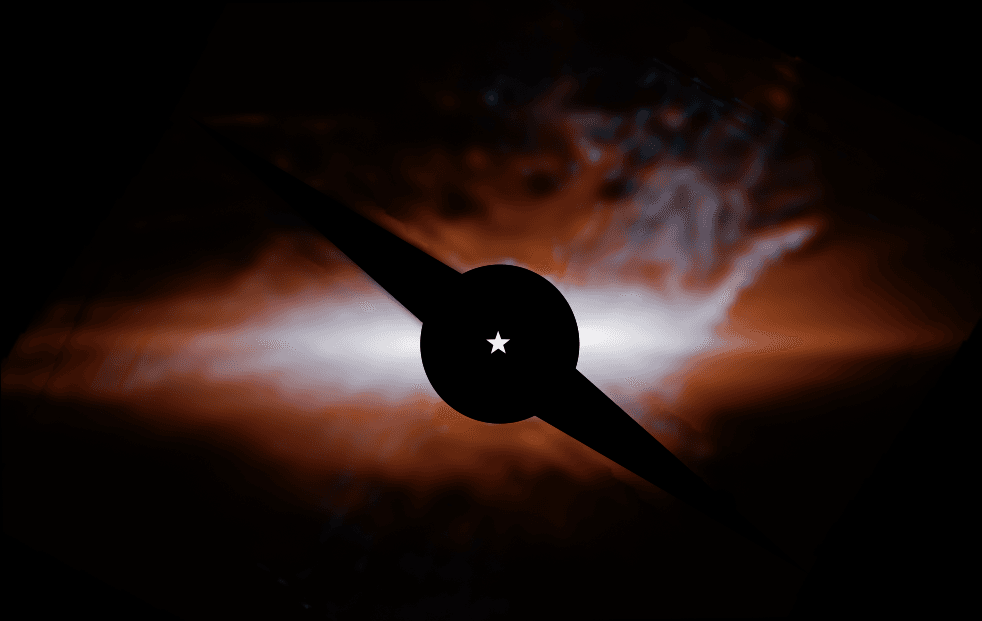 Beta Pictoris as a dusty debris disk, seen edge-on — NASA, ESA, CSA, STScI
Two Teams. Same Week. No Contact.
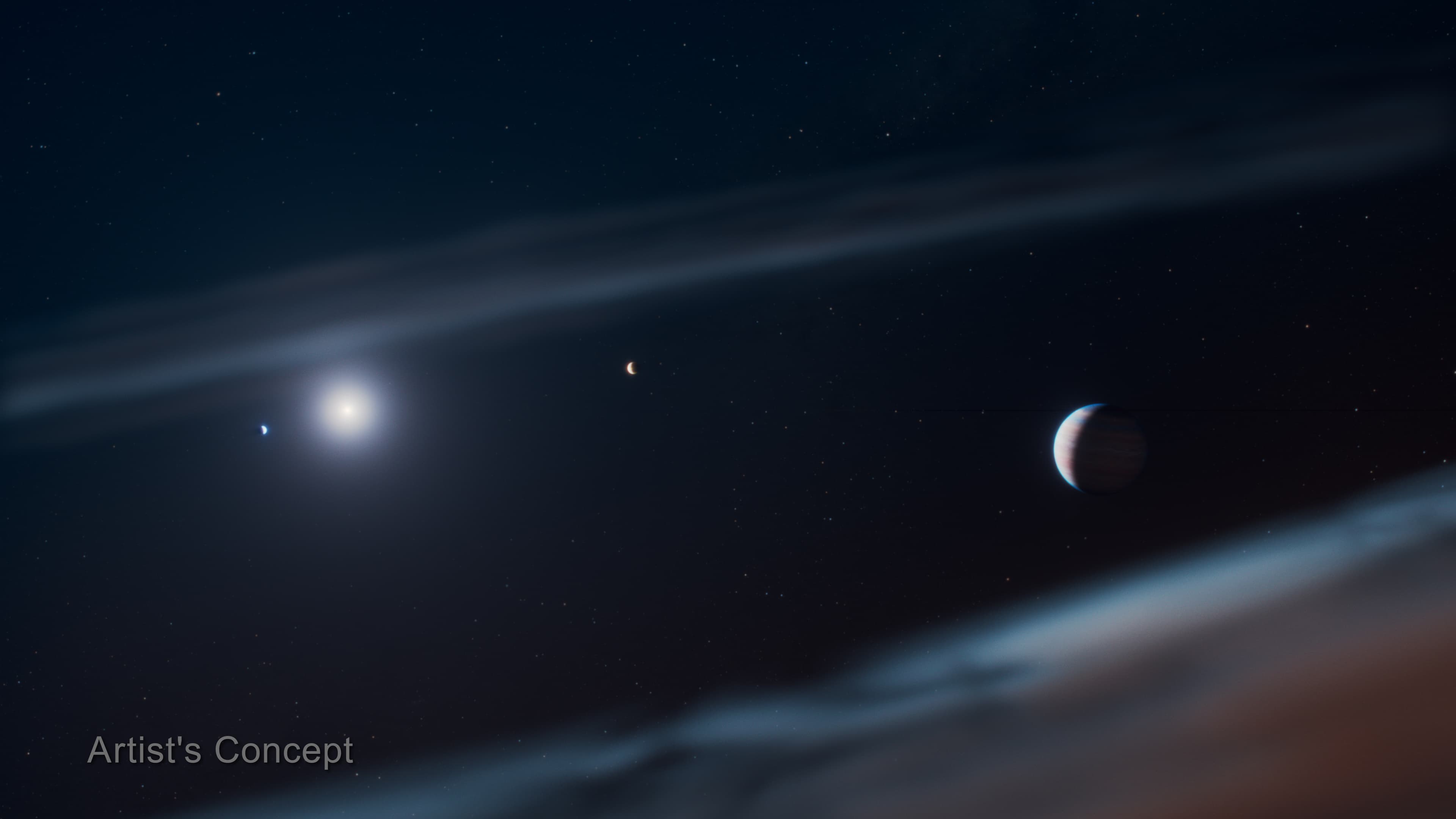 A giant exoplanet hangs inside the Beta Pictoris debris disk — NASA, ESA, CSA, STScI, Ralf Crawford
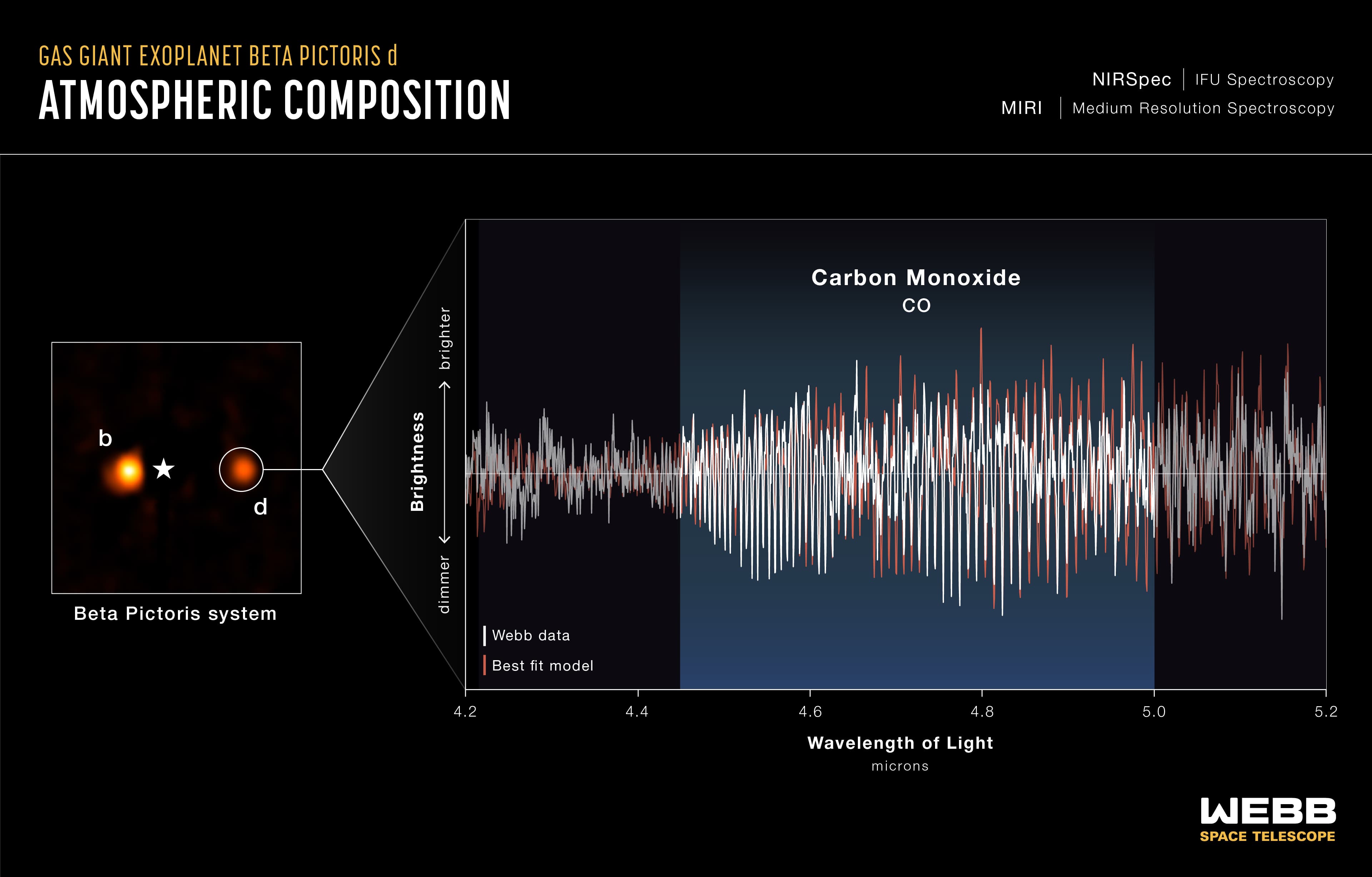 The planet's chemical fingerprint — CO absorption lines in the NIRSpec data — NASA, ESA, CSA, STScI
Why It Stayed Hidden: The Dust
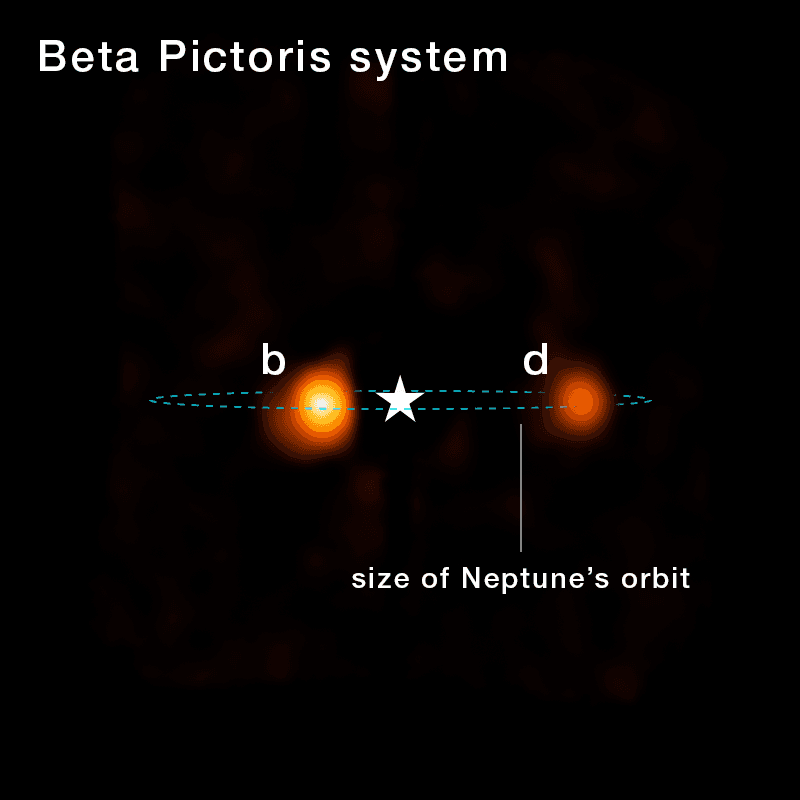 The reconstructed planet Beta Pictoris d as it appears in NIRSpec imagery — NASA, ESA, CSA, STScI
What We Now Know
- The new planet: Beta Pictoris d is at least twice the mass of Jupiter (roughly 2–4× by the spectroscopic estimate, ~2.4× from VLT) — the smallest of the three known planets, and the one on the widest orbit.
- The club of three: Beta Pictoris is now only the second known system — after HR 8799 — confirmed to hold three directly detected planets.
- A proof of concept: Scientists frame this as a new detection method — one that could reveal hidden worlds in other dusty, chaotic young systems that have defeated imaging searches for decades.
Why It Matters
Timeline
- 1983 — The debris disk around Beta Pictoris is discovered; it becomes one of the most studied disks in the sky.
- 2014 / 2015 — Beta Pictoris d first appears (unrecognized) in ground-based infrared archival images.
- Previously — Beta Pictoris b (directly imaged) and Beta Pictoris c are confirmed.
- July 15, 2026 — Gibbs, Ruffio, Bidot et al. (team 1) and an independent JWST team (team 2) both confirm Beta Pictoris d, publishing in the same issue of The Astrophysical Journal Letters.
Related Explanations
View All →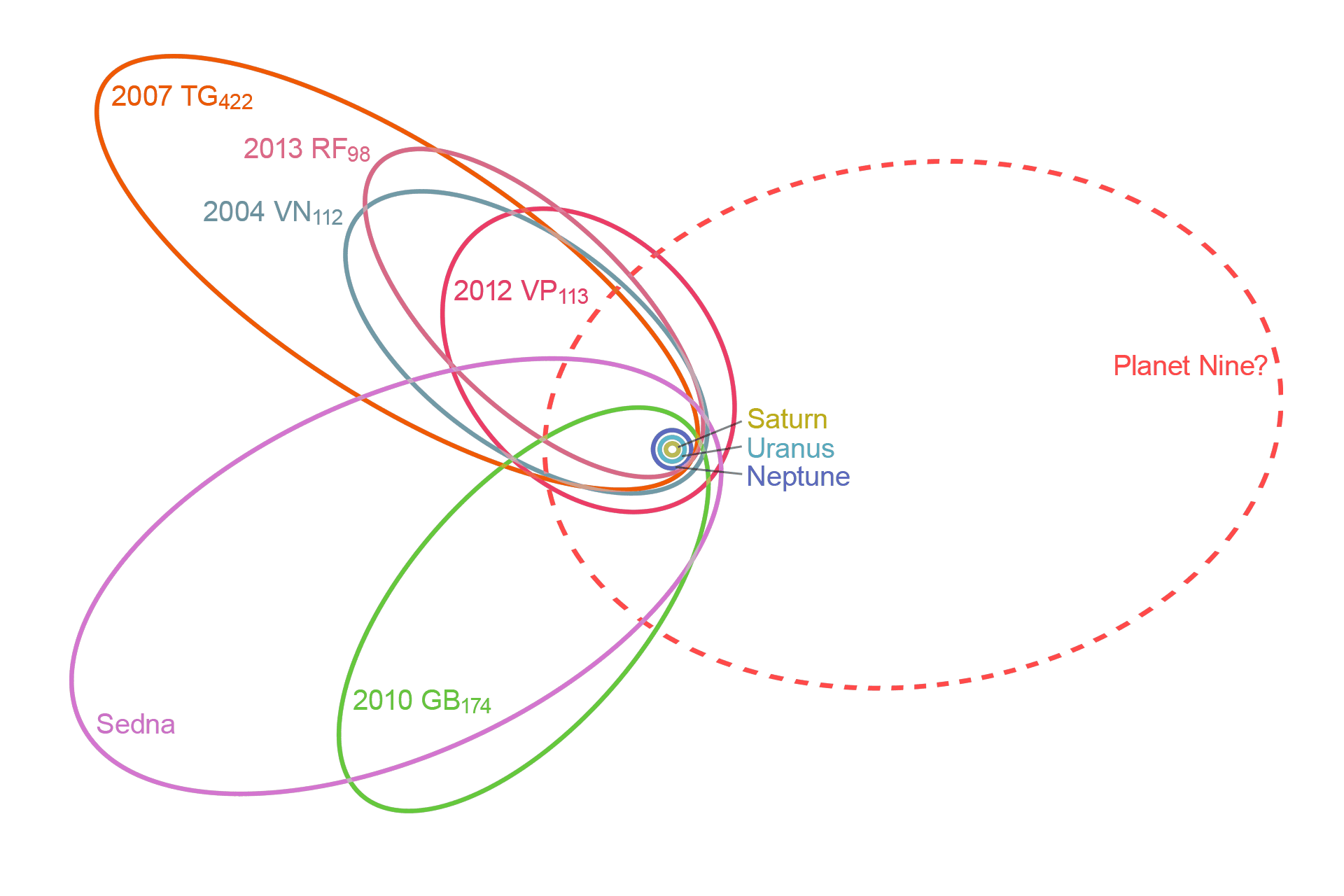
Planet Nine: The Hidden World That Might Be Real — And the Telescope That Will Find It
A massive planet may be hiding at the edge of our solar system — 400+ AU from the Sun, five to ten times Earth's mass, detectable only by the orbital chaos it causes in distant Kuiper Belt objects. The Vera Rubin Observatory began its 10-year survey in June 2026 and expects a definitive answer by late 2027.
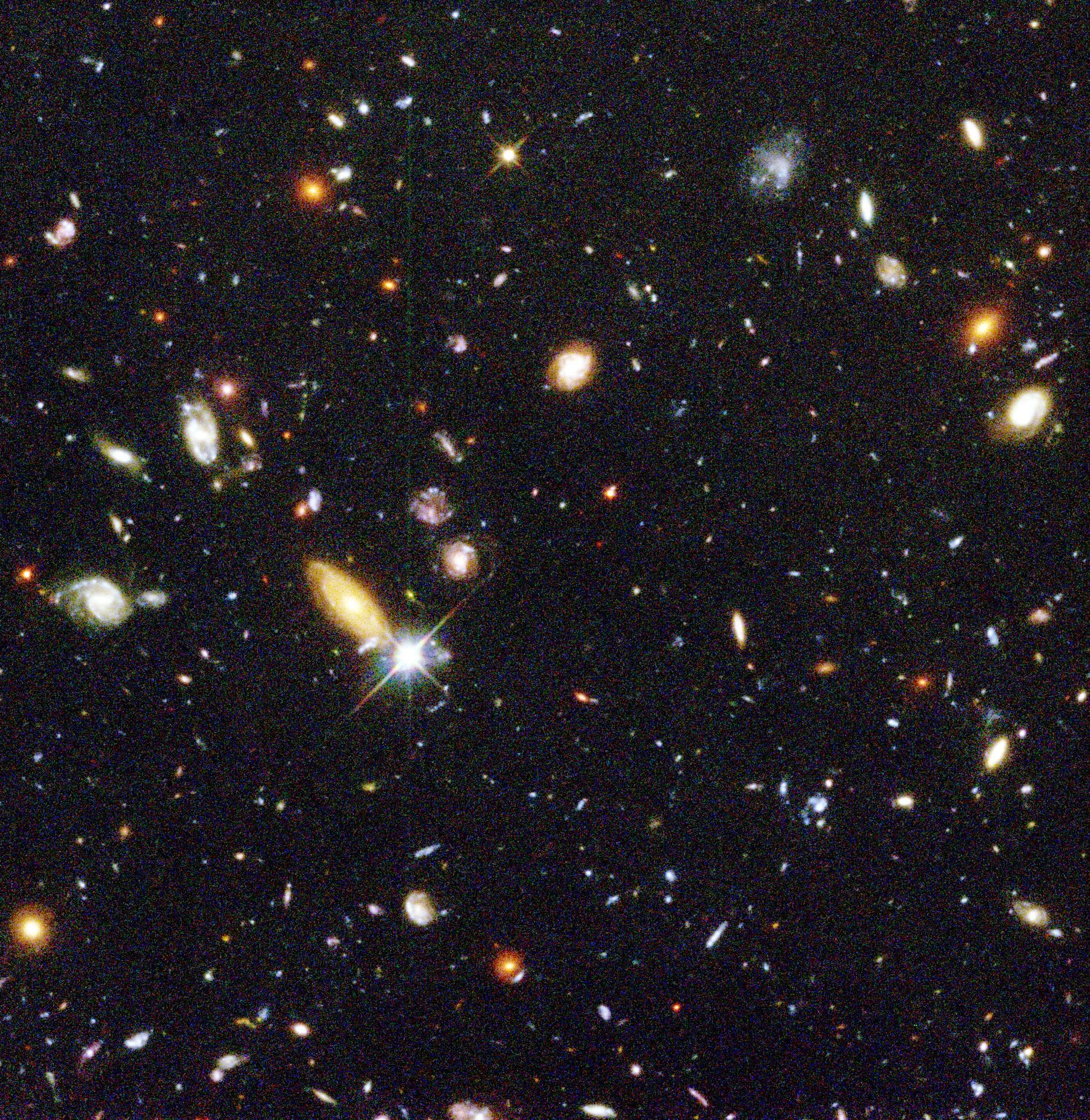
The End of the Universe: A Countdown From the Last Star to Heat Death
Every star that has ever shone will one day go out. The universe is dying — and it has been dying since the moment it was born. Here is the countdown to nothing: the complete far-future timeline from the death of our Sun to the final heat death of everything.

The Wandering Monster: A Black Hole Weighing a Million Suns Was Caught Eating a Star 30,000 Light-Years From Home
A black hole weighing a million Suns was caught tearing a star apart — 30,000 light-years from its galaxy's center. Astronomers have never seen a supermassive black hole this far from home. This is the story of TDE 2025abcr, the wandering monster.